Sciatica Treatment in Dublin — Understanding Your Pain & Finding Real Relief
Sciatica is one of the most common pain conditions we treat at MoveWell, and for good reason. Research suggests that up to 40% of people will experience sciatica at some point in their lives, and for those living and working in Dublin — where long commutes, desk-bound jobs, and sedentary lifestyles are the norm — that number may be even higher. The shooting pain down the leg, the numbness in the foot, the tingling that makes it impossible to find a comfortable position: sciatica can be genuinely debilitating.
What frustrates us most is how many people arrive at our clinic after being told to "just rest" or "take painkillers and wait it out." While rest has its place in the early acute phase, prolonged inactivity often makes sciatica worse. The muscles that support your spine weaken, the tissues that are compressing the nerve remain tight, and the cycle of pain and dysfunction deepens. At MoveWell, we take a different approach — one grounded in clinical assessment, targeted manual therapy, and progressive rehabilitation that addresses the actual cause of your sciatic pain rather than just masking the symptoms.
What Is Sciatica? Understanding the Sciatic Nerve
To understand sciatica, you first need to understand the nerve itself. The sciatic nerve is the longest and thickest nerve in the human body. It forms from nerve roots that exit the lower lumbar spine and sacrum — specifically from the L4, L5, S1, S2, and S3 vertebrae. These nerve roots merge together in the pelvis to form a single large nerve that is roughly the diameter of your little finger at its thickest point.
From the pelvis, the sciatic nerve travels deep beneath the gluteal muscles — passing either beneath or, in some people, directly through the piriformis muscle. It then runs down the back of the thigh, where it splits into two branches just above the knee: the tibial nerve and the common peroneal nerve. These branches continue into the lower leg and foot, providing sensation and motor control to much of the lower limb.
Sciatica occurs when this nerve becomes compressed, irritated, or inflamed at any point along its path. The result is pain that radiates from the lower back or buttock down through the leg, often accompanied by numbness, tingling, or weakness. The specific location and character of the pain can tell a skilled therapist a great deal about where the nerve is being affected and what is causing the compression.
Common Causes of Sciatica
Understanding what is causing your sciatica is the single most important factor in treating it effectively. The same symptom — pain down the leg — can arise from very different underlying problems, each requiring a different treatment approach.
Disc Herniation / Bulging Disc
The most well-known cause of sciatica is a herniated or bulging disc in the lumbar spine. The intervertebral discs act as cushions between the vertebrae, and when the outer wall of a disc weakens, the inner gel-like material can protrude outward and press against a nerve root. This is most common at the L4-L5 and L5-S1 levels, precisely where the sciatic nerve roots emerge. Disc herniations can occur from heavy lifting, repetitive bending, or — more commonly than people realise — from years of sustained poor posture and gradual disc degeneration.
Piriformis Syndrome
The piriformis is a small, deep muscle in the buttock that runs from the sacrum to the top of the femur. The sciatic nerve passes directly beneath this muscle in most people, and in roughly 15-20% of the population, the nerve actually passes through the muscle itself. When the piriformis becomes tight, inflamed, or goes into spasm, it can compress the sciatic nerve and produce symptoms that are virtually identical to disc-related sciatica. This is one of the most underdiagnosed causes of sciatic pain, and it is one we see frequently at our Dublin clinic — particularly in people who sit for long periods or who have imbalanced hip mechanics.
Spinal Stenosis
Spinal stenosis refers to a narrowing of the spinal canal or the openings (foramina) through which the nerve roots exit the spine. This narrowing can occur due to age-related changes such as thickening of the ligaments, bone spurs, or degenerative disc changes. Stenosis tends to affect people over 50 and typically produces symptoms that worsen with standing and walking but improve when sitting or leaning forward.
Muscle Imbalance & Poor Posture
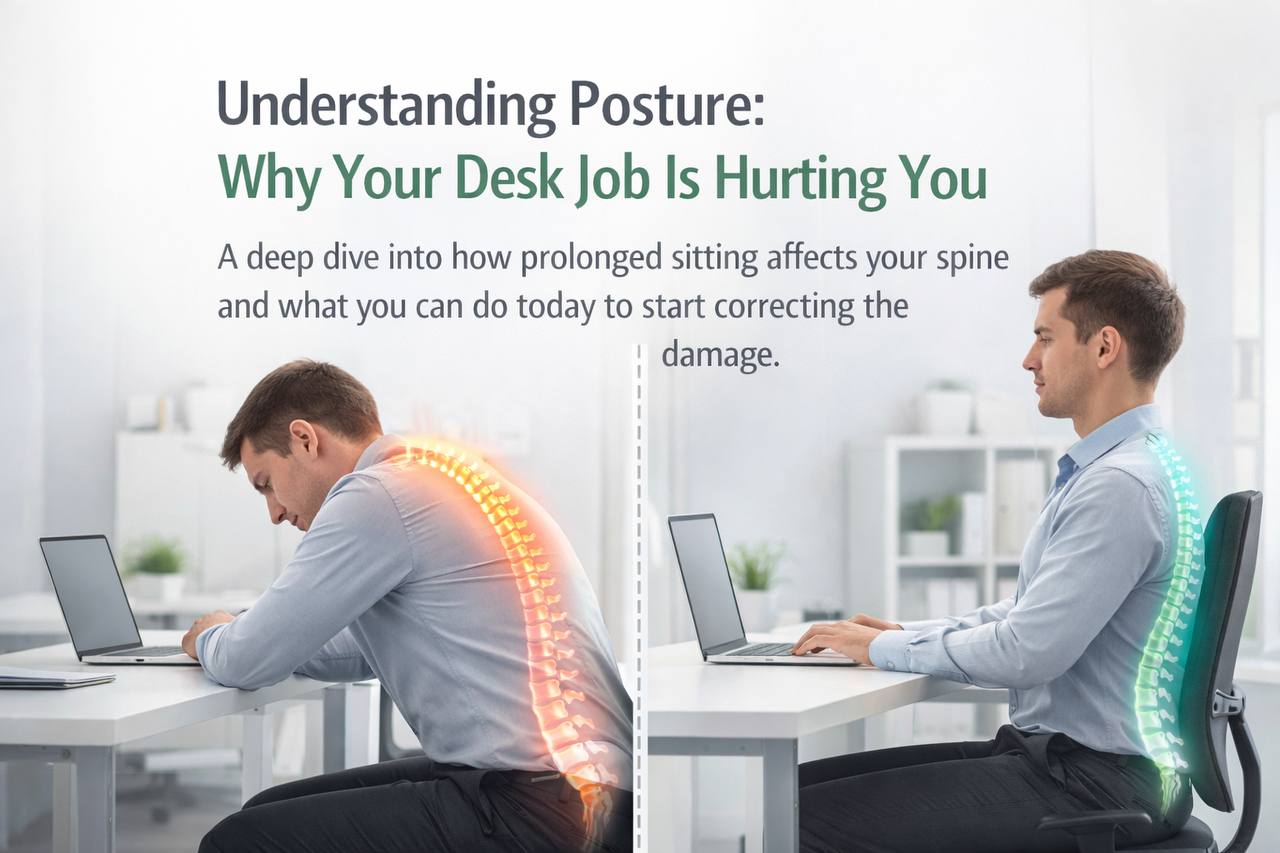
This is the cause we see most often in Dublin's working population. Hours spent sitting at a desk with poor ergonomics creates a predictable pattern: tight hip flexors, weakened glutes, shortened hamstrings, and an anterior pelvic tilt that increases pressure on the lumbar spine. Over time, this imbalance can irritate the sciatic nerve either through direct compression at the piriformis or through increased mechanical stress on the lumbar discs. If this sounds familiar, our posture correction guide covers the problem and practical solutions in detail.
Pregnancy-Related Sciatica
During pregnancy, several factors can contribute to sciatic pain. The growing uterus can press directly on the sciatic nerve. Hormonal changes, particularly the release of relaxin, loosen the ligaments that stabilise the pelvis, which can shift joint alignment and increase nerve irritation. The additional weight carried at the front of the body also changes posture and increases load on the lumbar spine. Pregnancy-related sciatica typically responds well to gentle manual therapy and targeted exercises, though treatment must be appropriately adapted for each trimester.
Prolonged Sitting: The Dublin Desk Worker Connection
We see a clear pattern in our practice. Many of our sciatica clients are professionals who commute into Dublin city centre — often spending 30 to 60 minutes sitting in a car or on a bus — then sit at a desk for eight or more hours, before sitting again on the commute home. That is potentially ten or more hours of continuous hip flexion and spinal compression per day. The body simply was not designed for this. The sustained pressure on the lumbar discs and piriformis, combined with the gradual weakening of the stabilising muscles, creates an environment where sciatica becomes almost inevitable for some people.
Sciatica Symptoms — When to Seek Treatment
Sciatica presents differently depending on which nerve root is affected and the underlying cause. However, there are common patterns that most people recognise. The hallmark symptom is pain that starts in the lower back or buttock and radiates down the back or side of the leg. This pain can range from a dull, persistent ache to sharp, electric-shock-like sensations that take your breath away. Many people also experience numbness or tingling in the leg, foot, or toes, and some notice weakness — difficulty pushing off when walking, or a foot that feels like it is "not quite there."
The pain is typically worse when sitting, which is why so many Dublin office workers struggle with it throughout the working day. Coughing, sneezing, or straining can intensify the pain, particularly if a disc herniation is involved. Some people find that standing and walking provide relief, while others find the opposite. These differences provide valuable diagnostic information.
Red flags that require immediate medical attention: While most sciatica resolves with appropriate treatment, certain symptoms indicate a serious condition called cauda equina syndrome, which requires emergency care. Seek immediate medical attention if you experience loss of bladder or bowel control, numbness in the saddle area (inner thighs and groin), progressive weakness in both legs, or sudden severe worsening of symptoms. These situations are rare, but they are medical emergencies.
When massage therapy is appropriate: For the vast majority of sciatica cases — those involving muscle tightness, piriformis syndrome, postural imbalances, or mild to moderate disc issues — clinical massage therapy and rehabilitation are excellent treatment options. We work alongside your GP and can refer to a consultant if imaging or further investigation is needed. In the Irish healthcare system, direct access to physiotherapy and clinical massage means you do not need a GP referral to begin treatment, which allows us to start addressing the problem quickly.
How MoveWell Treats Sciatica in Dublin
Our approach to sciatica treatment begins with a thorough clinical assessment. We need to understand not just where your pain is, but what is causing it. This involves a detailed history, postural analysis, range-of-motion testing, specific orthopaedic tests to differentiate between disc-related and muscular causes, and neural tension testing to assess how the sciatic nerve itself is moving.
Based on this assessment, we develop a treatment plan that typically includes several components:
Piriformis and glute release techniques: Using deep tissue work, trigger point therapy, and myofascial release, we target the piriformis and surrounding gluteal muscles to reduce compression on the sciatic nerve. This is often where clients feel the most immediate relief, particularly if piriformis syndrome is contributing to the problem.
Lower back decompression: We use specific manual therapy techniques to reduce pressure on the lumbar discs and open the spaces where the nerve roots exit the spine. This includes gentle traction, soft tissue mobilisation of the lumbar paraspinal muscles, and positional release techniques that encourage the disc material to centralise.
Neural mobilisation: Sometimes called nerve gliding or nerve flossing, these are gentle techniques designed to improve the way the sciatic nerve moves through the surrounding tissues. When a nerve becomes irritated, it can develop adhesions that restrict its normal gliding motion. Neural mobilisation restores this movement and reduces sensitivity.
Hip and pelvis rebalancing: Sciatica rarely exists in isolation. We address the broader mechanical picture — correcting pelvic alignment, releasing tight hip flexors, and restoring balance between the muscle groups that stabilise your pelvis and spine. This is essential for preventing recurrence.
Progressive exercise programme: Manual therapy addresses the immediate pain, but lasting results require strengthening the muscles that support your spine and hips. We prescribe specific exercises tailored to your condition and stage of recovery, progressing from gentle mobility work to strengthening and functional movement patterns.
A typical treatment timeline involves weekly sessions for the first three to four weeks, during which most clients experience significant pain reduction. We then taper to fortnightly sessions as we shift the focus from pain management to rehabilitation and strengthening. Most clients with moderate sciatica see substantial improvement within six to eight sessions. To learn more, explore our clinical services.
Sciatica stopping you in your tracks? You don't have to live with it.
Book your assessment at MoveWell Dublin →Can Massage Help Sciatica? The Evidence
This is a question we are asked regularly, and the answer is a qualified yes — provided we are talking about clinical massage rather than a general relaxation massage. The distinction matters enormously. A general spa massage may provide temporary relief by reducing overall muscle tension, but it does not address the specific structures involved in sciatic nerve compression. Clinical massage, on the other hand, is a targeted, assessment-driven treatment that identifies and treats the exact muscles, fascial restrictions, and movement dysfunctions contributing to the problem.
The evidence base for manual therapy in sciatica treatment has grown considerably in recent years. A systematic review published in the Journal of Bodywork and Movement Therapies found that manual therapy techniques, including deep tissue massage and myofascial release, produced significant improvements in pain and function for patients with sciatica. Research from the British Medical Journal has also supported the use of targeted manual therapy as part of a multimodal approach to sciatica management, often producing outcomes comparable to more invasive interventions with fewer risks and side effects.
What makes a clinical approach different is the reasoning behind every technique. We do not simply massage the area that hurts. We assess the entire kinetic chain, identify the primary driver of nerve irritation, and apply specific techniques to address that driver. If your sciatica is caused by a tight piriformis, we use precise deep tissue and trigger point work on that muscle and its surrounding structures. If it is related to lumbar disc compression, we use decompression techniques and neural mobilisation. This targeted approach is why our clients typically see faster and more lasting results than they have experienced with general massage. For more on the specific techniques we use, read our article on deep tissue massage benefits.
5 Home Exercises for Sciatica Relief
These exercises can help manage sciatic pain between treatment sessions and are safe for most people with mild to moderate sciatica. However, if any exercise increases your leg pain or causes new symptoms, stop immediately and consult your therapist.
1. Knee to Chest Stretch: Lie on your back with both knees bent and feet flat on the floor. Slowly bring one knee toward your chest, holding behind the thigh with both hands. Hold for 20 to 30 seconds, feeling a gentle stretch in your lower back and buttock. Repeat three times on each side. This stretch gently opens the lumbar spine and reduces pressure on the nerve roots.
2. Piriformis Stretch (Figure-4): Lie on your back with both knees bent. Cross the ankle of the affected side over the opposite knee, creating a figure-4 shape. Reach through and grasp the back of the supporting thigh, gently pulling it toward your chest until you feel a deep stretch in the buttock of the crossed leg. Hold for 30 seconds, repeat three times. This directly targets the piriformis muscle, which is often a key contributor to sciatic nerve compression.
3. Sciatic Nerve Glide: Sit on a chair with good posture. Slowly straighten the knee on the affected side while simultaneously pointing the toes toward you (dorsiflexion). Hold for two to three seconds, then lower the foot back to the floor. Repeat 10 to 15 times. This exercise gently mobilises the sciatic nerve through its surrounding tissues, reducing adhesions and improving neural movement. Keep the movement smooth and pain-free — this should produce a pulling sensation, not sharp pain.
4. Cat-Cow Mobilisation: Start on all fours with your hands beneath your shoulders and knees beneath your hips. Slowly arch your back upward, tucking your chin to your chest (cat position), then reverse the movement by dropping your belly toward the floor and lifting your head (cow position). Move rhythmically between the two positions for 10 to 15 repetitions. This gentle spinal mobilisation improves flexibility in the lumbar and thoracic spine and encourages healthy disc hydration.
5. Glute Bridge: Lie on your back with knees bent and feet flat on the floor, hip-width apart. Push through your heels to lift your hips toward the ceiling, squeezing your glutes at the top. Hold for three to five seconds, then lower slowly. Repeat 10 to 15 times. This exercise strengthens the glutes and hamstrings, providing better support for the pelvis and reducing the load on the structures that irritate the sciatic nerve.
Perform these exercises daily, ideally in the morning and evening. Start gently and increase repetitions as your comfort allows. These exercises complement professional treatment but are not a substitute for it — especially if your symptoms are moderate to severe or have persisted for more than a few weeks.
How Long Does Sciatica Take to Heal?
This is one of the first questions every sciatica client asks, and the honest answer is that it depends on the cause and severity. However, we can provide general timeframes based on our clinical experience and the available research:
Mild sciatica (4 to 6 weeks): If your symptoms are recent, the pain is manageable, and the underlying cause is primarily muscular — such as piriformis tightness or general muscle imbalance — you can expect significant improvement within four to six weeks of consistent treatment and self-care. Many clients in this category feel noticeably better after just two to three sessions.
Moderate sciatica (8 to 12 weeks): For cases involving moderate disc involvement, significant piriformis syndrome, or longstanding postural dysfunction, a longer recovery period is typical. Eight to twelve weeks of regular treatment, combined with a progressive exercise programme, usually produces substantial improvement. You may not be completely pain-free at this point, but you should be functioning well and continuing to improve.
Chronic or recurring sciatica (ongoing management): If you have had sciatica multiple times or your symptoms have persisted for six months or more, the underlying cause is likely structural or deeply ingrained in your movement patterns. These cases benefit from an ongoing management approach: regular treatment sessions, a consistent exercise programme, and workplace ergonomic adjustments. The goal is not just to resolve the current episode but to fundamentally change the conditions that allow sciatica to recur. Take a look at our recovery packages, which are designed specifically for this kind of progressive, long-term care.
Frequently Asked Questions About Sciatica
Don't Live with Sciatica — Get Expert Treatment at MoveWell
Sciatica can feel overwhelming, especially when you have been living with it for weeks or months and the advice you have received has not helped. The truth is that most sciatica responds very well to the right treatment — treatment that identifies and addresses the specific cause of your nerve irritation rather than offering generic advice to rest and take painkillers.
At MoveWell, we combine clinical massage therapy, manual therapy techniques, and progressive rehabilitation to give you the fastest and most lasting relief possible. Whether your sciatica is caused by a tight piriformis, a disc issue, postural dysfunction, or the cumulative effects of Dublin desk life, we have the expertise and the clinical tools to help. If you are also experiencing broader lower back issues alongside your sciatica, our comprehensive guide to back pain treatment covers the full picture of how we approach spinal health.
You do not have to accept sciatica as part of your life. With the right approach, real relief is not just possible — it is expected.
Ready to Find Relief from Sciatica?
Expert sciatica treatment at MoveWell Dublin. Start your recovery journey today.
Book Your Assessment TodayRelated Articles