Back Pain Treatment in Dublin — Expert Clinical Solutions at MoveWell
Back pain is the single leading cause of missed work days in Ireland, affecting an estimated one in four adults at any given time. According to the Health Service Executive, musculoskeletal conditions — with lower back pain chief among them — account for more GP visits than almost any other complaint in the country. Yet despite how common it is, the majority of people in Dublin either push through the discomfort, rely on over-the-counter painkillers, or simply wait and hope it resolves on its own.
At MoveWell, we see the consequences of that approach every day. Patients arrive at our Dublin clinic having endured months or even years of back pain that could have been addressed far sooner. Our philosophy is straightforward: identify the root cause, treat it with skilled hands-on therapy, and equip you with the knowledge and exercises to prevent recurrence. We do not offer a quick fix or a generic rubdown. We offer clinical, evidence-based treatment that gets results.
In this article, we will explore why back pain is so prevalent in Dublin, the types of back pain we treat at MoveWell, our step-by-step treatment approach, what to expect during your first session, and practical self-help strategies you can start using today. Whether you are dealing with a sudden flare-up or a long-standing chronic issue, this guide will give you a clear picture of your options and a path forward.
Why Is Back Pain So Common in Dublin?
Dublin has undergone a dramatic transformation over the past two decades. The city is now a European technology hub, home to the EMEA headquarters of Google, Meta, Salesforce, HubSpot, and dozens of other multinational companies. The Silicon Docks and surrounding business districts are filled with tens of thousands of knowledge workers who spend eight or more hours a day seated at a desk, staring at a screen. This sedentary office culture is one of the primary drivers of the back pain epidemic we see in our clinic.
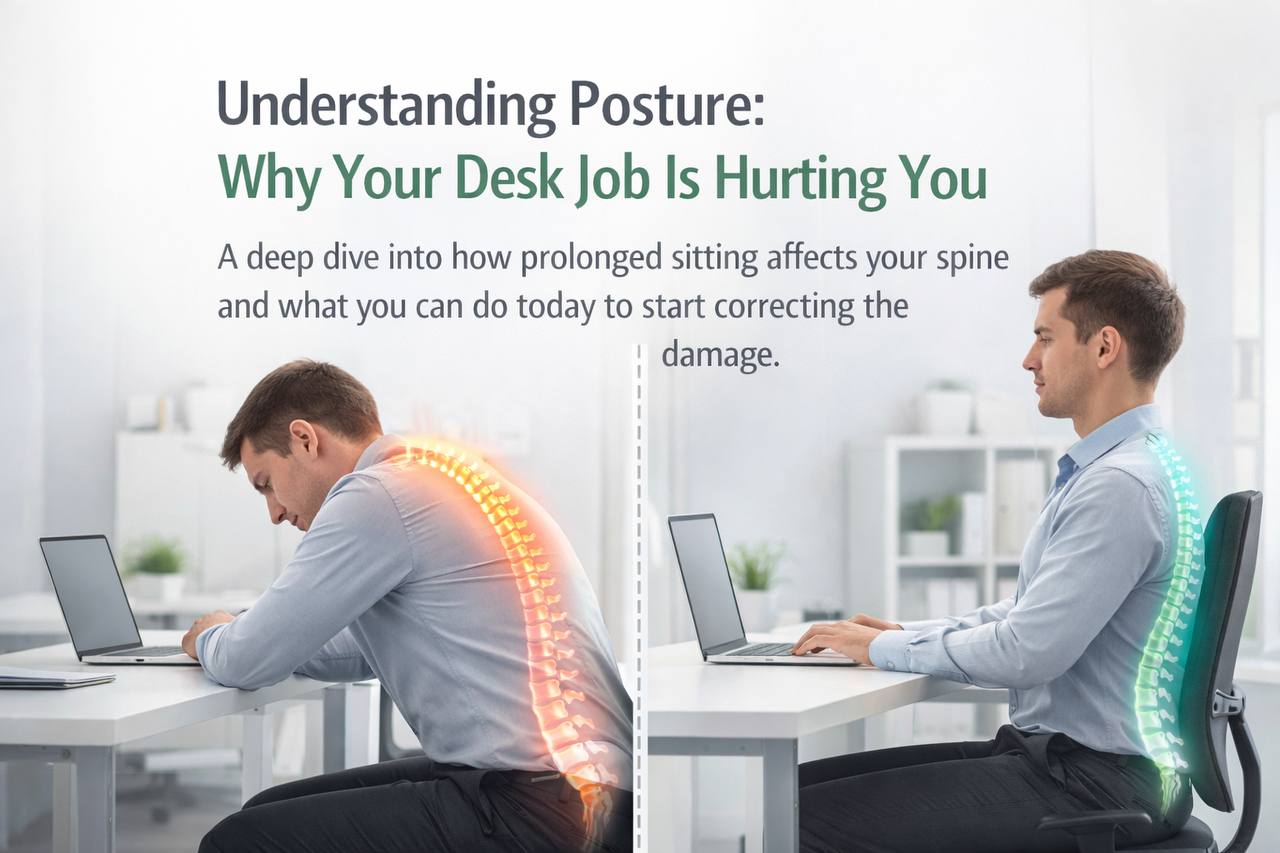
Prolonged sitting places enormous strain on the lumbar spine. When you sit for extended periods, your hip flexors shorten, your glutes become inactive, and your lower back muscles are forced to compensate. Over weeks and months, this creates muscle imbalances that lead to stiffness, pain, and reduced mobility. Add a poorly set up workstation — a monitor too low, a chair without proper lumbar support — and the problem compounds quickly.
Commuting makes things worse. Whether you are standing on a packed Luas tram, sitting on the DART for forty minutes, or white-knuckling your way through M50 traffic, your spine is being loaded in suboptimal positions. Drivers tend to slouch into their car seat with their head pushed forward, placing excessive strain on the cervical and thoracic spine. Public transport passengers often hunch over their phones, reinforcing the same damaging postural patterns.
Then there is what we call weekend warrior syndrome. Dublin is a city that loves its sport. GAA matches, parkrun events along the Grand Canal, gym sessions in the early morning, training for the Dublin Marathon — the city is full of active people. The problem arises when five days of sitting are followed by two days of intense physical activity without adequate warm-up, cool-down, or recovery. Muscles that have been dormant all week are suddenly asked to perform at high intensity, and the back often bears the brunt.
Finally, we cannot ignore the role of stress. Dublin is a fast-paced city with a high cost of living, and the mental burden of work pressure, housing concerns, and daily life takes a physical toll. Stress activates the sympathetic nervous system, causing muscles to tense — particularly in the upper back, shoulders, and lower back. Chronic stress leads to chronic tension, and chronic tension leads to pain.
Types of Back Pain We Treat at MoveWell
Not all back pain is created equal. At MoveWell, we see a wide spectrum of presentations, and the treatment approach differs significantly depending on the type. Here are the main categories we work with.
Acute Back Pain
Acute back pain comes on suddenly and is typically the result of a specific event — lifting something heavy with poor form, an awkward twist during sport, sleeping in a bad position, or even a sudden sneeze that catches you off guard. The pain can range from a dull ache to a sharp, debilitating spasm that makes standing upright nearly impossible. The good news is that acute back pain usually resolves within two to six weeks with the right treatment. The key is to address it early rather than letting guarding patterns and compensatory movements develop, which can turn an acute problem into a chronic one.
Chronic Lower Back Pain
We classify back pain as chronic when it persists for longer than twelve weeks. This is the most common type of back pain we treat at MoveWell, and it is rarely caused by a single event. Instead, chronic lower back pain typically develops gradually as a result of accumulated muscle imbalances, poor postural habits, weakness in the core and glutes, and degenerative changes in the spine such as disc thinning or facet joint irritation. Chronic pain requires a structured, multi-session treatment plan that addresses both the symptoms and the underlying dysfunction.
Sciatica and Radiating Pain
Sciatica refers to pain that originates in the lower back or buttock and radiates down the back of the leg, sometimes reaching the foot. It is caused by compression or irritation of the sciatic nerve, often due to a herniated disc, piriformis syndrome, or spinal stenosis. Sciatica can be intensely painful and often comes with additional symptoms such as tingling, numbness, or weakness in the affected leg. We take a careful, graduated approach to treating sciatica, combining gentle manual therapy with nerve gliding exercises and postural correction. For a deeper dive into this topic, see our detailed guide to sciatica.
Postural Back Pain
Postural back pain is the quiet epidemic among Dublin's office workers. It develops gradually from sustained poor posture — slouching at a desk, craning the neck forward to read a screen, rounding the shoulders over a laptop. Unlike acute injuries, there is no single moment you can point to. The pain tends to be a persistent dull ache in the mid-back or lower back, often accompanied by stiffness in the shoulders and neck. Postural back pain responds exceptionally well to a combination of manual therapy, ergonomic adjustment, and targeted strengthening exercises. If this sounds familiar, you may also benefit from our posture correction guide.
How MoveWell Treats Back Pain — Our Approach
Our treatment process at MoveWell is systematic, thorough, and entirely personalised. We do not use a cookie-cutter protocol. Every patient receives a treatment plan built around their specific condition, lifestyle, and goals. Here is how it works.
Step 1: Comprehensive Clinical Assessment. Every new patient begins with a detailed assessment. We take a full health history, discuss your symptoms, lifestyle, work habits, exercise routine, and any previous injuries or treatments. We want to understand not just where it hurts, but why it hurts. This conversation alone often reveals patterns and contributing factors that have been overlooked elsewhere.
Step 2: Physical Assessment and Movement Screening. We then conduct a hands-on physical assessment. This includes postural analysis, range of motion testing, orthopaedic tests to rule out specific pathologies, and a functional movement screen to identify weakness, tightness, and compensatory patterns. This assessment tells us precisely which structures are involved and guides our treatment strategy.
Step 3: Hands-On Therapy. Based on our findings, we apply a combination of clinical techniques tailored to your condition. This may include deep tissue massage to release chronic muscle tension, trigger point therapy to deactivate painful knots, myofascial release to restore tissue elasticity, and spinal mobilisation techniques to improve joint function. We adjust pressure, technique, and focus area based on your feedback throughout the session. Our goal is not to cause unnecessary discomfort but to create meaningful change in the tissues.
Step 4: Corrective Exercises and Self-Management. Hands-on therapy addresses the immediate problem, but lasting results require active participation from you. Before you leave, we prescribe a small number of targeted exercises designed to strengthen weak areas, stretch tight structures, and reinforce better movement patterns. We also provide practical advice on workstation setup, sleeping positions, and daily habits that may be contributing to your pain.
Step 5: Follow-Up and Prevention. We schedule follow-up sessions based on your condition and response to treatment. At each subsequent visit, we reassess, adjust the treatment plan, and progress your exercises. Our ultimate aim is to get you to a point where you can manage your back health independently, returning only for periodic maintenance if desired.
Living with back pain in Dublin? Don't wait for it to get worse.
Book your clinical assessment at MoveWell →What to Expect During Your First Back Pain Session
Walking into a clinic for the first time can feel daunting, especially if you have had disappointing experiences elsewhere. At MoveWell, we want you to feel informed and at ease from the moment you arrive. Here is exactly what your first session looks like.
Your appointment will last approximately sixty minutes. We begin with a conversation — a detailed health history covering your current symptoms, pain levels, how long you have been dealing with the issue, what makes it better or worse, your occupation, exercise habits, and any relevant medical history such as previous imaging, surgeries, or diagnoses. We take the time to listen properly, because understanding your story is the foundation of effective treatment.
Next, we move into the physical assessment. You will be asked to perform a series of simple movements — bending, twisting, walking, squatting — so we can observe how your body moves and identify any restrictions or asymmetries. We then perform hands-on palpation and specific orthopaedic tests to pinpoint the structures involved. This is not a guessing game; it is a clinical process that gives us clear answers.
Treatment begins in the same session. Based on our assessment findings, we apply the most appropriate manual therapy techniques to begin addressing your pain and restoring function. You will not be sent away to wait for a follow-up before receiving any treatment. By the end of your first visit, you will have a clear understanding of what is causing your back pain, a treatment plan with realistic timelines, hands-on therapy that has already begun the healing process, and a set of home exercises to start working on immediately.
How Many Sessions Will I Need?
This is one of the most common questions we hear, and the honest answer is that it depends on your specific condition. However, we can provide general guidelines based on what we see in practice.
For mild or acute back pain — a recent muscle strain, a minor flare-up, or a postural issue that has not been present for long — most patients experience significant improvement within one to three sessions. For moderate to chronic back pain — conditions that have been present for months or years, involve multiple contributing factors, or include disc-related issues — a course of five to eight sessions is typically needed to achieve lasting results. For ongoing maintenance and prevention, particularly for those with physically demanding jobs, active sporting lifestyles, or a history of recurrent back pain, monthly sessions work well to keep the body functioning optimally and catch problems before they develop.
We never lock patients into unnecessary treatment plans. Our goal is to resolve your issue as efficiently as possible and discharge you with the tools to stay well. View our recovery packages for details on session options and pricing.
Self-Help Tips for Back Pain Relief
While professional treatment is the most effective route to recovery, there is plenty you can do between sessions to support your progress and manage discomfort. Here are our top recommendations.
Keep moving. It may seem counterintuitive when your back is sore, but prolonged bed rest is one of the worst things you can do for most types of back pain. Gentle walking — even ten to fifteen minutes around your neighbourhood or along the Liffey boardwalk — keeps blood flowing to the muscles and prevents stiffness from setting in. Movement is medicine.
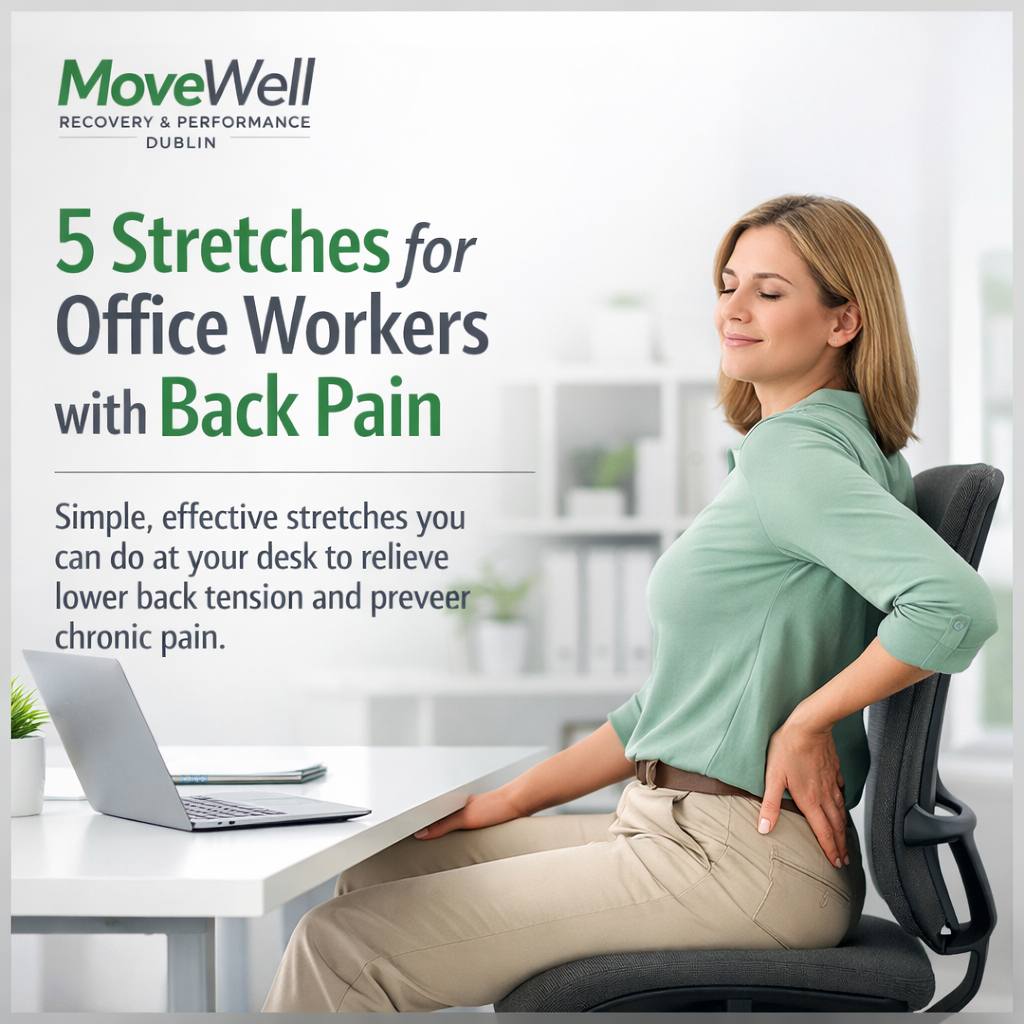
Set a posture timer. If you work at a desk, set a reminder on your phone to stand up, stretch, and reset your posture every thirty to forty-five minutes. A simple standing stretch where you extend your arms overhead and gently arch your back can counteract hours of flexion. Many of our patients at tech companies in the Docklands find this single habit transformative.
Strengthen your glutes. Weak glutes are one of the most common findings in patients with lower back pain. When your glutes are not doing their job, your lower back picks up the slack. Simple exercises like glute bridges, clamshells, and bodyweight squats performed three to four times per week can make a significant difference within a few weeks.
Mind your sleeping position. If you sleep on your back, place a pillow under your knees to maintain the natural curve of your lumbar spine. If you are a side sleeper, place a pillow between your knees to keep your hips aligned. Avoid sleeping on your stomach, as this forces your lumbar spine into excessive extension and rotates the neck.
Apply heat, not ice, for chronic pain. For chronic muscular back pain, a hot water bottle or heat pack applied for fifteen to twenty minutes can relax tight muscles and improve blood flow. Ice is generally more appropriate for acute injuries with swelling in the first forty-eight hours. Many patients have this backwards, so it is worth noting.
Manage your stress. This one is easier said than done, but the connection between mental stress and physical tension is undeniable. Whether it is a five-minute breathing exercise, a walk in St Stephen's Green, or a regular mindfulness practice, finding ways to downregulate your nervous system will have a direct positive effect on your back pain.
Frequently Asked Questions About Back Pain Treatment
Yes, and the evidence is strong. A systematic review published in the Cochrane Database found that massage therapy produces clinically meaningful improvements in pain and function for people with lower back pain. At MoveWell, we use clinical massage techniques — including deep tissue work, trigger point therapy, and myofascial release — that go far beyond relaxation massage. These techniques reduce muscle tension, improve blood flow, break down adhesions in the fascia, and restore normal movement patterns. Combined with corrective exercise, clinical massage is one of the most effective conservative treatments available for back pain.
Both are valid and effective options, and the best choice depends on your specific needs. Physiotherapists tend to focus on exercise-based rehabilitation and may use modalities such as ultrasound or dry needling. Clinical massage therapists specialise in hands-on soft tissue work, targeting muscle tension, trigger points, and fascial restrictions that contribute to pain. At MoveWell, our approach bridges the gap between the two disciplines. We combine skilled manual therapy with functional assessment and corrective exercise prescription, giving you the best of both worlds. Many of our patients have previously seen physiotherapists and find that our hands-on focus addresses aspects of their pain that exercise alone did not resolve.
At MoveWell, we offer both single sessions and multi-session recovery packages to suit different needs and budgets. Our pricing is transparent and competitive for Dublin. We believe in providing exceptional value — every session includes a thorough assessment, hands-on treatment, and take-home exercises, not just thirty minutes on the table. For those requiring a course of treatment, our packages offer a reduced per-session rate. Visit our pricing page for full details on current rates and package options.
Many Irish health insurance providers cover massage therapy and rehabilitation treatments under their plans. Providers such as Irish Life Health, Laya Healthcare, and VHI frequently include allowances for complementary therapies, though the specifics vary by plan level. We recommend checking your policy documents or contacting your insurer directly to confirm your coverage. MoveWell provides detailed receipts and any documentation you need to submit a claim. Some employers also offer wellness benefits that can be used toward treatment — it is worth checking with your HR department.
Many of our patients report noticeable improvement after their very first session. This typically includes reduced pain intensity, increased range of motion, and a general sense of relief and relaxation in the affected area. However, it is important to set realistic expectations. A single session can provide significant relief, but lasting results — particularly for chronic conditions — require a course of treatment combined with consistent home exercise. Acute back pain often resolves within one to three sessions, while chronic conditions typically need five to eight sessions for sustained improvement. We will give you an honest timeline during your initial assessment.
Why Choose MoveWell for Back Pain Treatment in Dublin
There is no shortage of massage therapists and clinics in Dublin, so why choose MoveWell? It comes down to a few things that we believe set us apart.
With over ten years of clinical experience and more than two thousand patients treated, we have seen virtually every presentation of back pain. From the desk-bound developer who cannot sit through a meeting to the GAA player who threw out their back in training, our breadth of experience means we can identify problems quickly and apply the right treatment from the outset.
Our approach is entirely evidence-based. We do not subscribe to fads or pseudoscience. Every technique we use is grounded in anatomy, physiology, and current clinical research. We stay up to date with the latest literature and continuously refine our methods to deliver the best possible outcomes.
Location and accessibility matter. Our clinic is centrally located in Dublin, making it easy to reach whether you are coming from the city centre, the suburbs, or anywhere along the DART or Luas lines. We also offer flexible appointment hours, including early morning and evening slots, because we understand that back pain does not wait for convenient office hours.
Above all, we care about your results. We measure progress, adjust treatment plans based on your response, and genuinely invest in getting you back to doing the things you love — whether that is playing with your children, running the Dublin Marathon, or simply sitting through a workday without pain. Explore our full range of services to see how we can help you.
Ready to Start Your Recovery?
Don't let back pain control your life. Book your first session at MoveWell Dublin today.
Book Your Assessment TodayRelated Articles