Headaches & Neck Tension — How Dublin's Stress Is Hurting Your Head (And How to Fix It)
If you live and work in Dublin, there is a strong chance that headaches are a regular, unwelcome companion. The tension that accumulates in your neck and shoulders throughout the working day does not just make you stiff — it travels upward, wrapping around the base of your skull and settling behind your eyes as a dull, persistent ache. Tension headaches are the most common type of headache worldwide, affecting up to 80 percent of the population at some point in their lives. In a city defined by long commutes, demanding tech-sector roles, and hours spent hunched over laptops, Dublin has all the ingredients for a headache epidemic.
Most people respond to headaches the same way: they reach for paracetamol or ibuprofen, push through the day, and hope it passes. And it usually does — until it comes back tomorrow, or the day after that. The painkillers are masking the symptom while the underlying cause goes completely untreated. The muscles in your neck, the joints at the top of your spine, the tension locked in your jaw — these are the real drivers of your headache, and they respond remarkably well to skilled manual therapy.
At MoveWell, we specialise in treating the musculoskeletal causes of headaches. Our approach goes beyond surface-level relaxation. We assess the structures of your neck and upper back, identify the specific muscles and joints contributing to your pain, and apply targeted clinical techniques to resolve the tension at its source. If headaches have become part of your daily routine, they do not have to be.
The Connection Between Your Neck and Your Headaches
The relationship between neck dysfunction and headaches is one of the most well-established connections in musculoskeletal medicine. The upper three vertebrae of your cervical spine — C1, C2, and C3 — share a neurological pathway with the trigeminal nerve, which is responsible for sensation across your face, forehead, and temples. When the joints or muscles in this region become irritated, compressed, or excessively tight, the pain signals converge in the trigeminal nucleus and are interpreted by your brain as a headache. This mechanism is what clinicians call cervicogenic headache — a headache that originates from the structures of the neck rather than from the brain itself.
Several key muscle groups play a starring role in this process. The suboccipital muscles — a small, deep group of four muscles at the very base of your skull — are among the most common culprits. These muscles control fine movements of the head and are densely packed with proprioceptive nerve endings. When they tighten from sustained postures or stress, they can produce a deep, nagging pain that radiates from the back of the head to the temples and behind the eyes.
The upper trapezius, which runs from the base of your skull down across your shoulders, is another frequent contributor. This is the muscle that feels rock-hard when someone presses on the top of your shoulders after a long day. When trigger points develop in the upper trapezius, they refer pain upward into the side of the head and temple. The sternocleidomastoid (SCM), the large muscle that runs diagonally down the front of your neck, can produce a remarkably wide pattern of referred pain when irritated — from behind the ear to above the eye, across the cheek, and even into the top of the head.
The nerves that exit between the C1, C2, and C3 vertebrae — particularly the greater occipital nerve — can become compressed or irritated by tight muscles and stiff joints in this region. This nerve irritation produces sharp, shooting pains that start at the back of the head and radiate forward, a pattern many people mistakenly attribute to migraine or sinus pressure.
Types of Headaches We Treat at MoveWell
Tension-Type Headaches
Tension headaches are characterised by a bilateral, pressing or tightening sensation that feels like a band squeezing around your head. The pain is typically mild to moderate and does not usually include nausea or sensitivity to light. These headaches are directly connected to sustained muscle tension in the neck, scalp, and shoulders. They are overwhelmingly common among desk workers and are frequently triggered by poor posture, screen fatigue, and emotional stress. Our treatment targets the specific muscles driving the tension pattern and restores normal mobility to the cervical spine, which often provides relief within the first session.
Cervicogenic Headaches
Cervicogenic headaches originate from the structures of the cervical spine itself — the joints, discs, ligaments, and muscles of the upper neck. These headaches are typically one-sided, start at the back of the head or neck, and worsen with certain neck movements or sustained positions. They can mimic migraines in their intensity but are fundamentally different in their cause. At MoveWell, we perform a thorough cervical assessment to identify which specific vertebral segments are involved and then apply targeted joint mobilisation and soft tissue techniques to restore function and reduce the headache at its source.
Migraine with Muscular Triggers
Not all migraines are purely neurological. A significant proportion of migraine sufferers have identifiable muscular trigger components — meaning that tension in the neck, jaw, or shoulders is what initiates or intensifies their migraine episodes. For these individuals, addressing the musculoskeletal component can dramatically reduce the frequency and severity of attacks. While we do not claim to cure migraines, our clients with muscular-trigger migraines consistently report fewer episodes and reduced intensity after a course of clinical treatment.
Stress-Related Headaches
Stress does not cause headaches in the abstract — it causes them through very real physiological mechanisms. When you are under prolonged stress, your sympathetic nervous system keeps your muscles in a heightened state of contraction. Your shoulders creep upward, your jaw clenches, your breathing becomes shallow, and the muscles at the base of your skull tighten. Over weeks and months, this sustained muscular guarding produces chronic pain patterns that manifest as daily or near-daily headaches. Our treatment addresses both the muscular consequences of stress and the postural habits that perpetuate the cycle.
Common Causes of Tension Headaches in Dublin
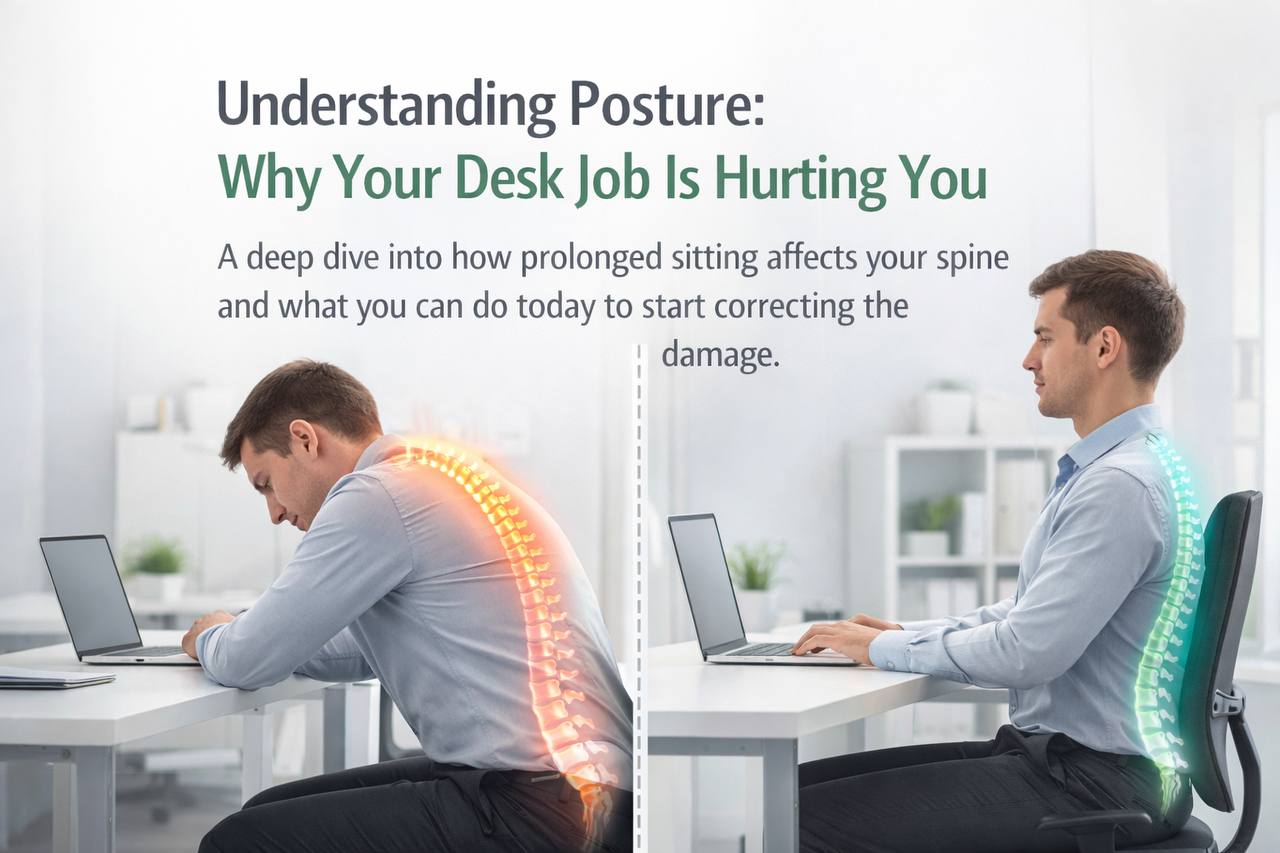
Desk work and screen time. Dublin is home to the European headquarters of some of the world's largest technology companies, and the city's workforce spends an extraordinary number of hours in front of screens. Sustained forward head posture — where the head drifts forward of the shoulders while looking at a monitor — places enormous strain on the posterior neck muscles. For every inch your head moves forward, the effective load on your cervical spine increases by roughly 4.5 kilograms. After eight hours in this position, your neck muscles are exhausted and your headache has arrived on schedule. If this sounds familiar, our posture correction guide provides detailed strategies for your workstation setup.
Stress and jaw clenching. The pressure of Dublin's tech sector, the financial services industry, and the general cost-of-living demands create a population carrying enormous amounts of stress in their bodies. Jaw clenching — often unconscious, happening both during the day and at night — is one of the most common stress responses we see in our clinic. The masseter and temporalis muscles, when chronically tight, refer pain into the temples and sides of the head, producing headaches that many people attribute to tension or sinus issues.
Poor sleep position. Sleeping on your stomach or with too many pillows forces your neck into sustained rotation or flexion for hours at a time. Waking up with a headache is often a direct consequence of neck strain accumulated overnight. The pillow should support the natural curve of your cervical spine without pushing your head forward or to one side.
Dehydration and lifestyle factors. Ireland's coffee culture is thriving, but caffeine is a double-edged sword for headache sufferers. While moderate caffeine can temporarily relieve headache pain, excessive consumption followed by withdrawal is a well-documented headache trigger. Combine this with inadequate water intake — particularly common among busy professionals who forget to drink during the workday — and you have a recipe for recurring head pain.
Phone posture and "text neck." The average person spends over three hours per day looking down at their phone. This sustained neck flexion compresses the joints of the upper cervical spine and shortens the muscles at the front of the neck while overstretching those at the back. During the morning DART or Luas commute, look around and you will see an entire carriage of people in the exact posture that produces headaches.
How MoveWell Treats Headaches
Our approach to headache treatment begins with a comprehensive assessment. We do not simply massage your neck and hope for the best. We need to understand which structures are driving your specific headache pattern before we can treat it effectively.
Neck and shoulder assessment. We evaluate your cervical range of motion, test the mobility of individual vertebral segments, assess muscle tone and identify trigger points, and examine your overall posture. This tells us precisely where the problem lies and guides every aspect of the treatment that follows.
Trigger point release. Trigger points in the suboccipital muscles, upper trapezius, levator scapulae, and SCM are frequently the direct source of referred headache pain. We use sustained pressure, dry needling principles, and precise soft tissue techniques to deactivate these trigger points and restore normal muscle function. Clients often report that pressure on a specific trigger point reproduces their familiar headache pattern exactly — which is how we know we have found the right structure.
Cervical mobilisation. When the joints of the upper cervical spine are stiff or restricted, they contribute to nerve irritation and muscle guarding. We use gentle, controlled joint mobilisation techniques to restore normal movement to restricted segments, reducing the mechanical irritation that feeds the headache cycle.
Myofascial release. The fascia — the connective tissue that wraps around and between every muscle — can become restricted and contribute to pain patterns that extend far beyond the immediate area of tightness. Myofascial release techniques applied to the cervical and thoracic regions help restore tissue mobility and reduce the widespread tension that underlies many chronic headache presentations.
Postural correction. Treating the muscles and joints is essential, but lasting relief requires addressing the postural habits that created the problem. We assess your typical working posture, identify the specific patterns that are contributing to your headaches, and provide you with practical corrections that you can implement immediately.
Stress management and lifestyle advice. Because stress is such a significant driver of headache patterns, we discuss practical strategies for managing your body's stress response — from breathing techniques to jaw relaxation exercises to sleep hygiene improvements. You can explore the full range of our treatment services to find the approach that suits you best.
Tired of headaches controlling your life? There is a better way.
Book headache relief treatment at MoveWell Dublin →Can Massage Really Cure Headaches?
This is a question we hear frequently, and the honest answer is nuanced. Clinical massage and manual therapy have strong evidence supporting their effectiveness in reducing the frequency, duration, and intensity of tension-type and cervicogenic headaches. Multiple systematic reviews have concluded that manual therapy produces clinically meaningful reductions in headache frequency — in some studies, reducing headache days per month by 50 percent or more. The evidence for manual therapy in migraine management is growing, particularly for migraines that have identifiable muscular triggers.
However, it is important to distinguish between clinical massage therapy and general relaxation massage. A spa-style massage may feel pleasant and produce temporary relief through general relaxation and endorphin release. Clinical massage, by contrast, is assessment-driven and targeted. We identify the specific muscles and joints contributing to your headache, apply techniques chosen for their effectiveness on those structures, and progressively work through a treatment plan designed to produce lasting change. The difference in outcomes is significant.
We also believe in setting realistic expectations. If you have been suffering from chronic daily headaches for five years, one session will not resolve the problem entirely. What you can expect is a noticeable reduction in headache intensity after your first treatment, with progressive improvement over a course of sessions. Most clients with chronic tension headaches see substantial improvement within three to six sessions, with many achieving a level of headache control they had not experienced in years.
Self-Help Guide — Reducing Headache Frequency
Workstation ergonomic adjustments. Your monitor should be at eye level, directly in front of you, approximately an arm's length away. Your chair should support the natural curve of your lower back, and your feet should rest flat on the floor. Your keyboard and mouse should be positioned so that your shoulders remain relaxed and your elbows are bent at roughly 90 degrees. Small adjustments here can make a dramatic difference. For a complete setup guide, see our ergonomic setup guide.
Neck stretching routine. Perform these stretches gently, holding each for 20 to 30 seconds, twice daily:
- Upper trapezius stretch: Sit upright and gently tilt your right ear toward your right shoulder. Place your right hand lightly on the left side of your head to add a gentle stretch — do not pull. You should feel a stretch along the left side of your neck. Repeat on the opposite side.
- Levator scapulae stretch: Turn your head approximately 45 degrees to the right, then tilt your chin downward toward your right armpit. Place your right hand behind your head to gently increase the stretch. You should feel this along the back-left side of your neck. Repeat on the opposite side.
- Suboccipital release: Place two tennis balls in a sock and lie on your back with the balls positioned at the base of your skull, one on either side of your spine. Allow the weight of your head to rest on the balls for two to three minutes. This provides a gentle sustained pressure release on the suboccipital muscles.
- Chin tuck exercise: Sit or stand with your back against a wall. Without tilting your head up or down, draw your chin straight backward as if making a double chin. Hold for five seconds and repeat ten times. This strengthens the deep neck flexors and counteracts forward head posture.
Hydration and caffeine management. Aim for at least two litres of water daily. If you consume caffeine, try to keep it consistent — the same amount at roughly the same times each day. Caffeine withdrawal headaches are triggered by variation in intake, so eliminating your afternoon coffee on weekends while maintaining it on workdays is a common and entirely preventable headache trigger.
Sleep position optimisation. The ideal sleeping position for headache prevention is on your back or on your side with a pillow that supports the natural curve of your neck without pushing your head forward. Your pillow should fill the gap between your ear and the mattress when lying on your side. If you sleep on your back, a thinner pillow or a contoured cervical pillow prevents excessive neck flexion.
Stress reduction techniques. Diaphragmatic breathing — breathing deeply into your belly rather than shallowly into your chest — activates the parasympathetic nervous system and reduces the muscular tension that drives stress-related headaches. Practice five minutes of slow, deep belly breathing at your desk twice during the workday. It costs nothing and the evidence for its effectiveness is robust.
Jaw relaxation exercises. Rest the tip of your tongue on the roof of your mouth, just behind your front teeth. Allow your teeth to part slightly and let your jaw drop open gently. This "rest position" prevents unconscious clenching. Set a reminder on your phone to check your jaw position every hour during the workday — you may be surprised how often you catch yourself clenching without realising it.
When to See a Doctor About Your Headaches
While the vast majority of headaches have benign musculoskeletal or tension-related causes, certain headache presentations require prompt medical investigation. You should seek medical attention immediately if you experience any of the following:
- A sudden, severe headache that reaches maximum intensity within seconds to minutes — sometimes described as a "thunderclap headache." This can indicate a serious vascular event.
- Headache accompanied by fever, stiff neck, rash, or confusion, which may suggest an infectious or inflammatory condition.
- Visual disturbances that persist beyond the typical migraine aura duration of 20 to 60 minutes, or that are accompanied by weakness, numbness, or difficulty speaking.
- A new headache pattern that is significantly different from your usual headaches, particularly if you are over 50.
- "The worst headache of your life" — any headache that is dramatically more intense than anything you have previously experienced warrants immediate medical assessment.
Manual therapy is appropriate for musculoskeletal headaches — the tension, postural, and cervicogenic headaches that make up the majority of headache presentations we see in clinical practice. If you are unsure whether your headaches are appropriate for our treatment, we are happy to discuss your symptoms before you book and refer you to the appropriate medical professional if needed.
Frequently Asked Questions About Headache Treatment
Break Free from Chronic Headaches — MoveWell Dublin
Living with chronic headaches is exhausting — not just physically, but mentally and emotionally. The constant pain erodes your concentration, your mood, your patience, and your enjoyment of life. Many of our clients tell us they had simply accepted headaches as something they would always have to endure. They had no idea that the tight muscles in their neck were the primary driver, or that targeted manual therapy could make such a meaningful difference.
If headaches are part of your daily life, we encourage you to take the first step toward understanding why they are happening and what can be done about it. The same approach that has helped our clients with back pain treatment and sciatica treatment applies here: identify the cause, treat it directly, and give you the tools to prevent it from returning. Your body is telling you something. Let us help you listen.
Ready for Lasting Headache Relief?
Expert headache and neck tension treatment at MoveWell Dublin. Take control of your pain today.
Book Your Session TodayRelated Articles